
inkspot publishing
(inkspotpublishing.com).
‘In parts of the city, the whole street system has disappeared. People who have lived here all their lives can no longer find their bearings. Huge piles of rubble, concrete and collapsed or derelict buildings are the new landmarks to be negotiated, where once stood houses and shops inhabited by industrious housewives and tired clerks, noisy children and grumbling grandparents. Winding cobbled lanes, with black and white half-timbered medieval houses which survived the Plague and the Black Death, have vanished forever. The delicately wrought stained glass windows, soaring roofs, and finely sculpted arches of ancient churches are now just piles of stones and blackened beams.’
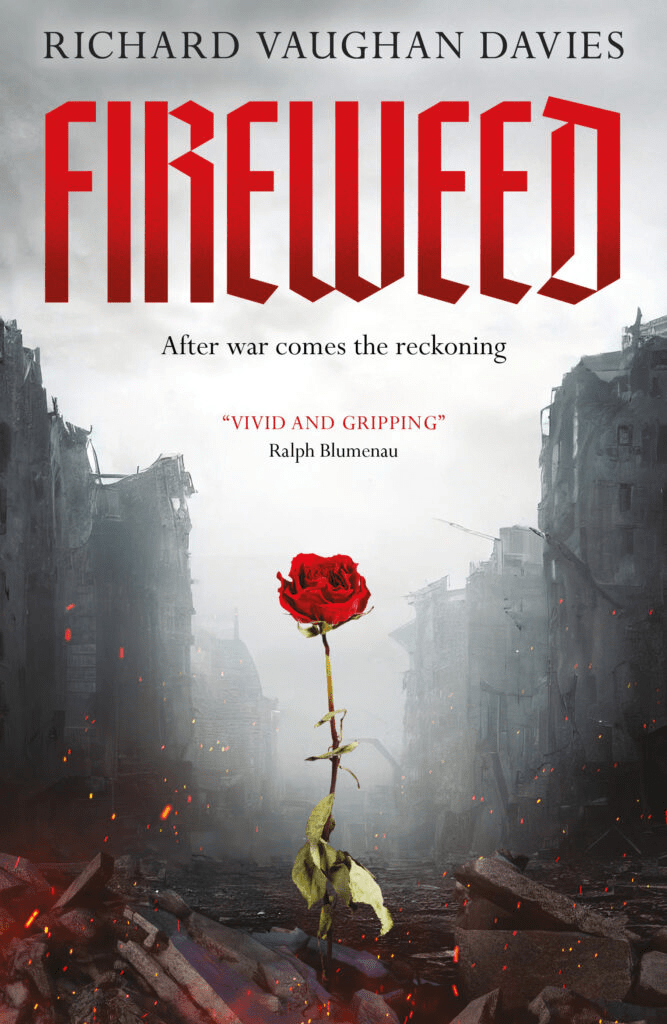
It is the psychogeography of a derelict and broken Hamburg that represents the heart of this accomplished novel by Richard Vaughan Davies. The Second World War has left Hamburg shattered, a place of danger and despair, as the remaining residents attempt to navigate a city in suppressed turmoil, whilst they wrestle with the inevitable anger and guilt concerning Germany’s role as the defeated aggressor.
Vaughan Davies skilfully deploys four main characters as a means of exploring this landscape and the way that it in turn shapes its inhabitants. The novel’s main protagonist Adam, a young British military lawyer, is part of a legal team tasked with the prosecution of Nazi war criminals. Adam is a necessarily problematic ‘hero’. Falling for Rose, a German prostitute, he fantasises about a life together whilst still exploiting the woman – and other women working in the same brothel. He is naive, but it is telling that as much as the defeat of Germany has left the previously wealthy and privileged Rose destitute, so Adam’s own actions place Rose in danger. As Rose rebuilds her life on her own terms, a future life with Adam becomes increasingly precluded; a clear signal that it is only in her own agency that Rose can trust.
Rose – Rosa von Schirm und Loewen – is the embodiment of the novel’s title Fireweed, a flower that is both beautiful and resilient, stubbornly emerging from the ruins of Hamburg. The manner in which she seeks to prevail suggests a future that is both free of the past and not dependent upon the good offices of those men who seek to exploit her.
However, the two other main protagonists – war criminal Henryk van Reen and the terminally ill Dr Ernst Mann – offer differing responses to the guilt associated with Germany’s actions before and during the Second World War. Van Reen is unrepentant, casually offering an ‘only-following-orders’ defence. Mann is tormented by guilt and the weight of history. Mann is troubled by a personal connection with Hitler, the only part of the novel that I felt was somewhat unconvincing and unnecessary. The much more resonant guilt that becomes apparent as we learn more about Mann’s role during the war should have been foregrounded and did not need the personal association with Hitler.
Indeed, the aspect of the novel I found most compelling was its consideration of the aftermath of a major conflict and the damage inflicted on the people and places transformed by that conflict. Whilst the damage to a city can be observed and ostensibly repaired, it also acts as a reminder that war leaves a bitter legacy for its survivors, both nominal winners and losers, a legacy not so readily repaired.
 Precarious Gothic